
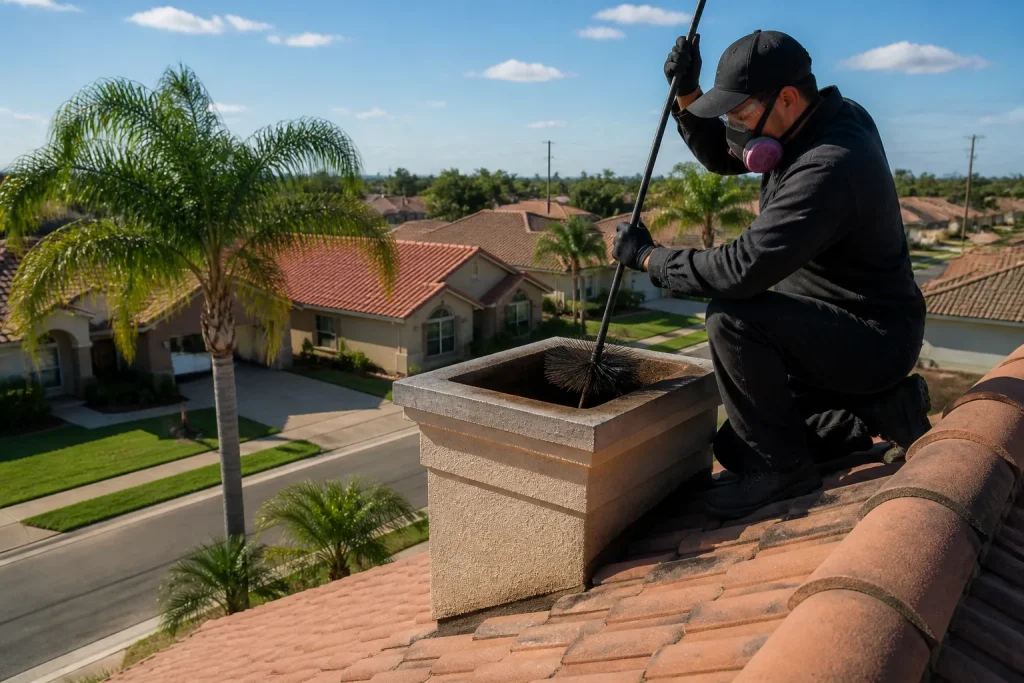
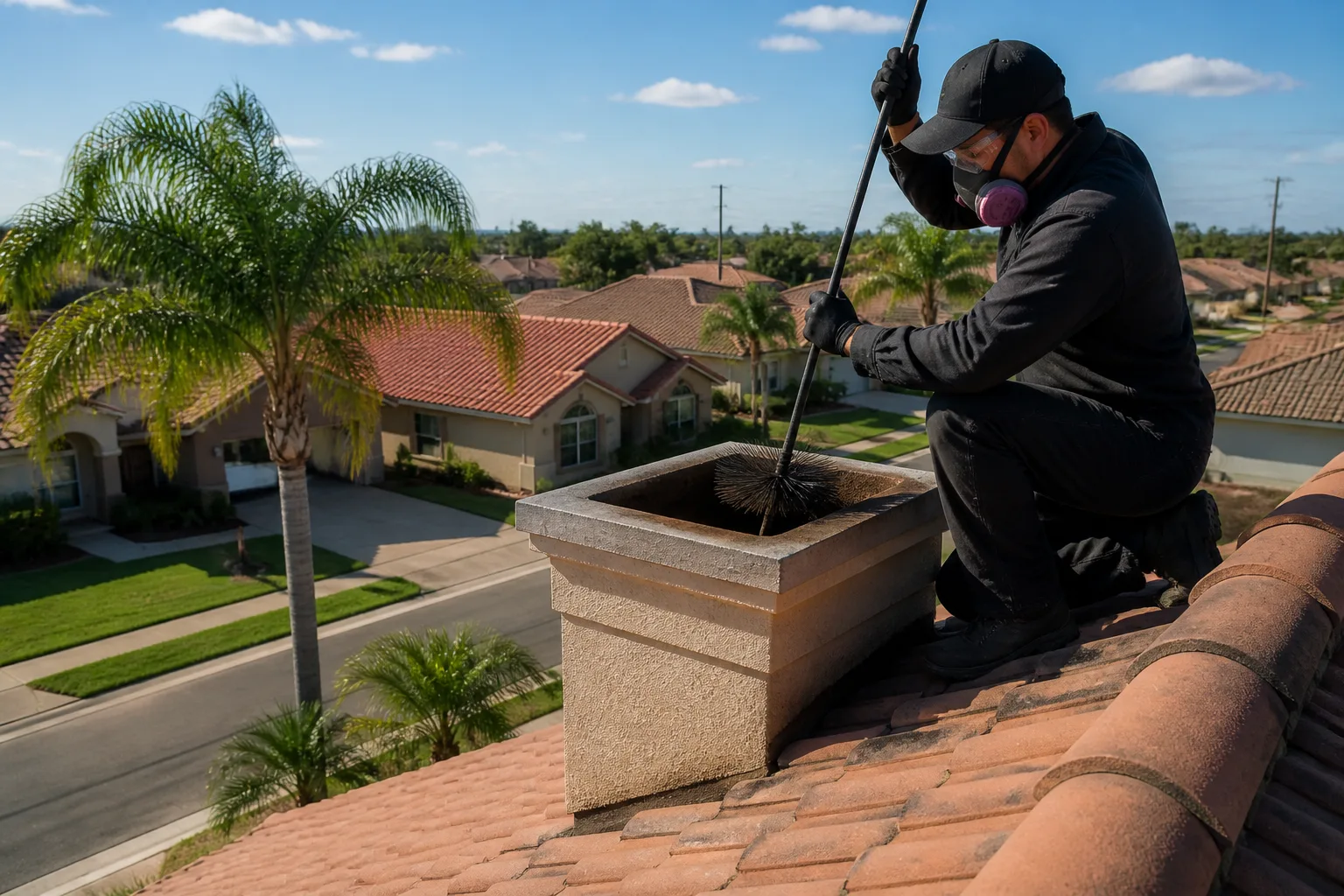
Emergency Chimney Sweep Near Me: What McAllen Homeowners Should Do First
When smoke rolls back into the living room at 9 p.m., the first call isn’t to a chimney sweep. It’s three quick steps that keep a bad situation from becoming a dangerous one. Most homeowners skip them, then panic-call the first number they find. The sequence below is what we’d want our own families to do in McAllen – and it buys time whether the technician arrives in an hour or the next morning.
If you’d rather not work through it alone, call (866) 566-0403. We answer 24/7, and dispatch runs 7am to 7pm, Sunday through Friday.
What Should You Do First When Smoke Fills the Room?
Open windows and doors to your living space, get everyone out of the immediate area, and only then figure out the source. Smoke backing into a room is a draft problem more often than a fire, but you don’t get to assume that – so treat it as a fire until you know otherwise.
Here’s the order that actually works:
- Get people and pets out of the smoke. Open a window and a door on the same side of the room. Cross-flow clears faster than one open window alone.
- Check for the real danger signs. Call 911 if you see flames, smell a sharp burning-plastic or rubber smell, hear a roaring sound from the flue, or notice the chimney exterior is hot to touch. Those point to a chimney fire or a liner failure, not a draft issue.
- Leave the damper alone until you’re sure. If the firebox still has burning wood, closing the damper traps smoke in the room. Opening it wider can feed a flue fire. If the fire is dead out and smoke is spilling, opening the damper partway can help the draft recover. When you’re not sure, leave it and open a window.
- Don’t add fuel. No fresh logs, no paper, no lighter fluid. Let what’s burning burn down.
- Note the time and what triggered it. Wind gust? First fire of the season? A rainstorm the night before? That detail tells a technician a lot before anyone arrives.
In McAllen, the most common cause we hear about is the first cold snap of the season, when a flue that sat unused for months meets its first fire. Cool, damp air sitting in a chimney creates a stubborn draft that a warm fire can’t push out. That’s a slow-start problem, not an emergency – but it feels like one at 9 p.m.
Fire Risk or Draft Problem? How to Tell the Difference
Creosote ignition and liner failure give off different signals than a blocked or damaged cap. Knowing which you’re looking at tells you whether to call 911, call a sweep tonight, or wait for a normal appointment.
Signs that point to fire risk (call 911 or a sweep now):
- A loud roaring or rumbling from the flue, like a train passing
- Dense smoke or a visible glow at the chimney top
- Popping, crackling, or tapping sounds from inside the chimney
- A sharp, acrid smell that isn’t wood smoke
- Creosote flakes or ash on the roof or ground near the chimney
- Warped or discolored metal on a gas appliance vent
Signs that point to a draft or blockage problem (urgent, but not a 911 call):
- Smoke spilling steadily into the room with a normal fire
- A smoky smell that lingers even when the fireplace is cold
- Poor draft on windy days only, with normal behavior otherwise
- Visible debris, a bird nest, or a damaged cap on the chimney crown
The difference matters. Creosote ignition and liner failure can spread beyond the flue. A blocked cap or a cold-flue draft problem is unpleasant and needs fixing, but it stays put. In our experience, homeowners in McAllen tend to assume the worst – which is understandable, but a trained eye with a camera can tell the two apart in minutes.
What to Have Ready Before You Call Any Chimney Service
Have four things on hand before you dial: your firebox width and depth in inches, the fuel type (wood, gas insert, pellet, or a vented appliance), the last time the chimney was inspected or swept, and what you saw when the problem started. Those four answers let a technician arrive with the right tools the first time.
- Firebox dimensions. Rough inches are fine. A tape measure and a phone note take 30 seconds.
- Fuel type. A wood-burning fireplace, a gas insert, a pellet stove, and a vented furnace or water heater each need a different approach and different parts. Brand matters too – an Olympia Chimney cap and a Famco vent component call for different replacement parts.
- Last inspection or sweep. Even an approximate date – “two winters ago” – helps.
- The trigger. Storm damage? A loud noise? A smell that appeared after rain? More useful than a general “it’s not working.”
If you’re not sure what you have, don’t guess. A photo of the firebox and the chimney exterior sent to a technician before the visit saves a second trip. We’d rather see a blurry phone photo than a wrong description – a blurry photo still tells us the shape, the brand, and whether a cap is missing.
Why You Shouldn’t Try to Clear a Blockage Yourself
Don’t. A chimney blockage is not something to go after with a broom handle or a flashlight from below. The moments when homeowners hurt themselves are almost always the moments when they got curious.
Three reasons it’s a bad idea:
- You can’t see past the first bend. A flashlight aimed up from the firebox shows you the first two feet of flue. It does not show you a cracked flue tile, a bird nest above the smoke shelf, or the broken pieces of a cap that fell inward. That’s what a camera on a rod is for.
- Poking at a blockage can push it into a worse place. Debris jammed against a smoke shelf can be cleared. Debris pushed down onto a gas appliance vent connector can create a carbon monoxide problem. The end position matters more than the middle.
- A cold flue and a warm room produce a whoosh. When a fire is still smoldering below and you open the flue from the room, the sudden rush of new oxygen can flash the fire back. That flash is why professionals work from a cold chimney.
The same caution applies to climbing on the roof. A steep pitch, morning dew, and a moment of overconfidence are a bad combination. We send trained people with the right harness. You don’t need to be one of them.
How to Vet an Emergency Chimney Company Fast
Two questions separate a legitimate specialist from someone who’ll show up and guess:
- “What do you use to inspect before you sweep, and will I see the camera footage?” A real chimney technician runs a camera before recommending anything. If the answer is vague or the footage isn’t shown on-site, that’s your signal.
- “What brands do you install, and why?” A specialist will name what they work with – DuraFlex liner systems for irregular or aging flues, HeatShield for resurfacing a cracked flue without full replacement, Copperfield or Gelco for venting components – and explain why each one fits a specific situation. Someone who says “whatever the warehouse has” hasn’t thought it through.
One more thing worth asking: “What can wait?” A technician who can tell you honestly that a minor cap repair will hold until the weather clears, and that a full reline isn’t needed yet, is telling you the truth. If every call becomes a full liner replacement, ask for the camera evidence before you agree to anything.
When to call a pro
If the fire is out, the house is clear, and the smoke has stopped, you can wait for a normal appointment during dispatch hours. If smoke or smell returns every time you light a fire, get a camera inspection before the next burn. If you saw flames at the top of the chimney or heard the roar, call 911 first, then call us.
Related services in McAllen
If the chimney passes inspection but your dryer is taking two cycles to dry a load, the same crew handles dryer vent cleaning in the same visit. Most homeowners in McAllen don’t realize the two systems share the same fire-safety logic until they see the lint pulled out.
The Bottom Line
The sequence is simple: clear the room, check for the fire signs, leave the damper alone unless you’re sure, and don’t add fuel. Then gather the four details a technician will ask for and call someone who can name their parts and show you their camera footage. Nine times out of ten, what felt like a 9 p.m. emergency turns out to be a draft problem that can be fixed on a normal appointment. The other one time, the fast actions above are the reason it stays contained.
If you’re in McAllen and need help, Chimney Sweep McAllen offers free estimates – call (866) 566-0403. We answer 24/7, and fast dispatch runs 7am to 7pm, Sunday through Friday. Our technicians have up to 12 years of experience, and we work with the brands we name: DuraFlex, HeatShield, Copperfield, Olympia Chimney, Famco, and Gelco.
Frequently Asked Questions
A standard sweep runs in the range most McAllen homeowners expect for a single flue, and the final price is set per job by a written estimate after an inspection. Camera inspection and a photo report are included, so you see what we see. Call (866) 566-0403 for an exact quote – estimates are free.
Not always. A cracked flue tile can often be resurfaced with HeatShield instead of fully relined with a DuraFlex system, which is a meaningfully cheaper path when the flue is otherwise sound. You shouldn’t take that on faith – ask to see the camera footage before you agree to any liner work. Call (866) 566-0403 to book an inspection.
Most homes that burn wood regularly should be swept once a year, before the first burn of the season. Gas and pellet appliances follow a slightly different schedule based on manufacturer guidance. If you’re overdue, call (866) 566-0403 and we’ll book a sweep.
Creosote builds up, draft gets weaker, and the risk of a flue fire goes up – that’s the honest short answer. The longer answer is that some years are fine and some aren’t, which is exactly why an annual camera check is worth more than a guess. Call (866) 566-0403 if you haven’t had your chimney looked at this season.
Written by the team at Chimney Sweep McAllen.
Need Chimney Cleaning Help?
Call Chimney Sweep McAllen - licensed & insured, here with fast help in McAllen.
(866) 566-0403